
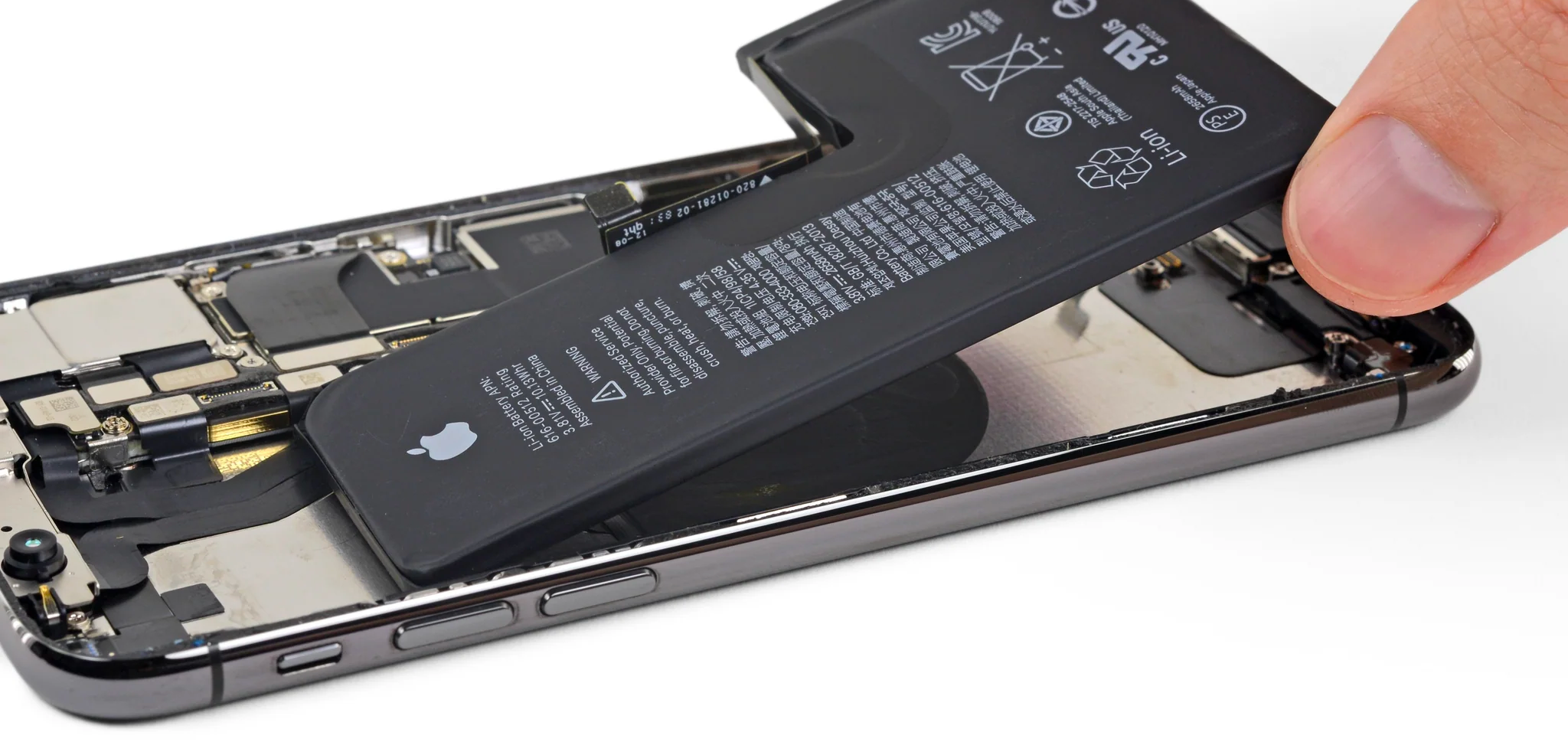
On iPhones, the battery is often shrouded in mystery. Unlike some competitors where it's possible to remove the battery, with iPhones, you have to rely on quality from the outset. Having a good-looking iPhone but a weak battery isn't advantageous when looking for a new smartphone.
However, there's a light at the end of the tunnel. In this guide, we aim to clarify your main questions about iPhone batteries, from understanding ideal capacity levels to the expected performance across different models.
It's important to note that the information in this guide is generally applicable to all recent and current iPhone models. Where necessary, we highlight differences in battery behavior between models. However, in general, this iPhone battery guide will be useful whether you're considering buying an iPhone 11 or 15.
Understanding iPhone Battery Capacity
With the release of iOS 11.3 in 2018, Apple introduced a new feature that provides insights into your battery's health: capacity. This measurement, on a scale of 0% to 100%, indicates how long your iPhone should last between charging cycles.
Over time, the maximum battery capacity decreases. While new iPhones generally have 100% full capacity, repeated use and potential damage, such as exposure to extreme temperatures, can reduce it.
As battery health deteriorates, its peak performance also decreases.
What is considered an ideal battery capacity for an iPhone?
You might think 100% is the only ideal condition, but that's not quite the case. Apple considers any iPhone with 80% or more battery capacity to be in optimal condition.
In fact, Apple is so confident in battery health that its one-year warranty covers any battery with 80% or more capacity. It's not uncommon to find iPhones after a year still with 95% or more battery capacity.
This is due to a kind of safety reserve. Apple designs its batteries with extra capacity, meaning that even operating at 80%, the iPhone is still in excellent condition.
How to check your iPhone's battery status
On any iPhone running iOS 11.3 or later, you can check battery capacity in Settings > Battery > Battery Health. It's important to note that this feature is only available on iPhone 6 and later models.
In addition to capacity, you can also see an important secondary metric: peak performance. Due to the nuances mentioned earlier, this metric can be even more significant than capacity.
If the battery is optimized to support all your applications, you'll see a message indicating that your iPhone is operating at normal peak performance. If the battery is worn out and needs replacement, you'll see a warning indicating that it is degraded and needs replacement.
Your iPhone will continue to function, but the time between charging cycles will be significantly reduced. This warning only appears when battery capacity is 79% or less.
How to extend your iPhone's battery life and performance
First, it's important to note that Apple aims to solve this problem for you. This resulted in the controversial "performance management" that was debated a few years ago.
Performance management automatically adjusts battery and iPhone performance to keep it running. You can manually disable it, but by this point, your battery is already near its end.
Alternatively, it makes sense to follow some simple measures that can prolong your iPhone's battery life, courtesy of Apple:
- Keep your iPhone updated with the latest iOS versions. Each major update includes new features to preserve and extend battery life.
- Try to keep your iPhone's temperature between 15 and 23 degrees Celsius, on average. Extreme temperatures can damage the lithium battery.
- Avoid excessive heat during charging. Some cases or surfaces can cause your iPhone to overheat, harming the battery. Touch the phone while charging to ensure it remains cool.
- Store your iPhone with half a charge. Completely discharging the battery can cause significant damage. Discharging a fully charged battery can have the same effect.
- Enable automatic screen brightness. Brighter screens tend to drain the battery faster, which can lead to more frequent charging cycles and loss of battery capacity.
- Check background activities in Settings > General > Background App Refresh. If too many apps are running in the background, they can drain your battery.
iPhone battery performance based on individual models
When you're considering buying a used iPhone, battery life and performance are likely your main concerns. While you can assess factors like processing speed or RAM, what does that really say about phone usage?
Fortunately, there are other metrics to consider. One is the Geekbench performance measurement, which standardizes all iOS devices for a direct performance comparison.
The results, from highest to lowest performance, are as follows:
- iPhone 11 Pro Max – 1330
- iPhone 11 – 1280
- iPhone XS Max – 1110
- iPhone XR – 1108
- iPhone 8 – 922
- iPhone 7 – 742
- iPhone 6S – 542
- iPhone 6 – 308
Battery life is another important consideration when buying an iPhone. AnandTech analyzed the battery life of each iPhone model over the past few years, based on how long a phone can continuously browse with WiFi after a full charge. The results were as follows:
- iPhone 11 Pro Max – 15.58 hours
- iPhone 11 – 14.03 hours
- iPhone XR – 12.95 hours
- iPhone 8 Plus – 11.83 hours
- iPhone XS Max – 10.31 hours
- iPhone 7 – 9.22 hours
Performance and battery life trends tend to be linear. Each new model tends to be more powerful than the last, while adding new features to preserve and extend battery life.
Conclusion when buying an iPhone:
Regardless of battery capacity, newer models tend to have longer battery life than older models, making them useful for longer.
iPhone vs. other brands: Who wins the battery battle?
If you're considering phones other than an iPhone, it's important to compare battery life and performance between Apple products and their competitors.
In the case of new phones, Apple generally has the advantage. In the performance and battery life indicators mentioned above, iPhones outperformed their Android and Google equivalents from the same year.
What about refurbished phones? Again, iPhones tend to be a safer bet compared to other refurbished brands. Overall, iPhones retain about 15% more value over time than the best Android equivalents. This suggests that the battery doesn't degrade as quickly, performance doesn't decrease as quickly, and the screen isn't damaged as easily.
In short, the iPhone generally wins the battery battle.
What to expect from a Mac Store iPhone?
At Mac Store, we guarantee that all refurbished iPhones have a battery capacity of at least 80%, meaning they offer similar performance to a new iPhone. You don't have to worry about immediately replacing the battery to get the desired performance.
Expectations may vary among other refurbished phone resellers. You may end up receiving a battery with less than 80% capacity, which will significantly reduce performance and battery life. It's important to be realistic about what to expect during the buying process.
Especially with older models, even a battery in perfect condition won't be as effective as in a newer model. As shown earlier, an iPhone 7 has more than 6 hours less battery life than a newer model. Keeping expectations aligned with reality can help you make a purchase that is good for you and your phone.
Partilhar:
Apple unveils stop-motion Christmas video shot on iPhone 15 Pro
How to turn on Find My for your iPhone, iPad, or iPod touch